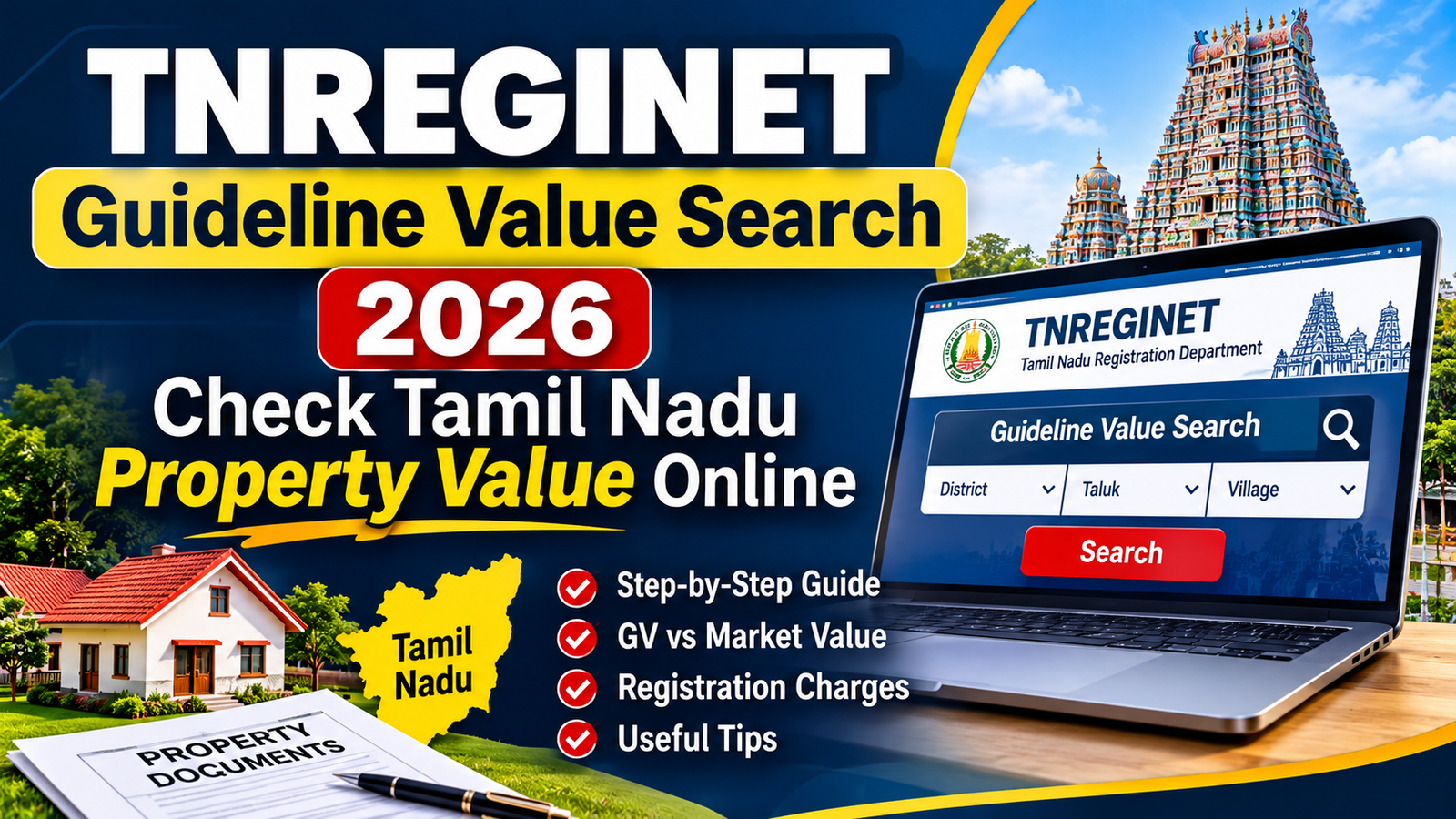
TNREGINET Guideline Value Search Check Tamil Nadu Property Value Online
TNREGINET Guideline Value Search 2026 Check Tamil Nadu Land and Property Value Online
Planning to buy, sell or register a property in Tamil Nadu? Understanding the guideline value can help you prepare for registration, estimate applicable government charges and ask the right questions before completing a property transaction. This guide explains how to use TNREGINET Guideline Value Search, what information you may need, how street-wise and survey-number searches work, and why guideline value should not be confused with the actual market price.
Independent informational guide. Official property values and registration services must be checked through the Tamil Nadu Registration Department.
What Is TNREGINET Guideline Value Search?
TNREGINET Guideline Value Search is an online facility that helps users look up the government guideline value associated with land or property in Tamil Nadu. The search facility is provided through the Tamil Nadu Registration Department portal. Depending on the available search option and the property’s location, users may be able to look up values using street details, survey numbers or composite-value information.
Guideline value is an important reference in property registration. It helps people understand the value recorded for registration-related purposes in a particular locality. A person considering a land purchase may want to check this figure before negotiating a price or preparing for registration. A seller may also review it to understand the applicable government valuation reference.
However, guideline value is not automatically the price a buyer must pay the seller. The actual selling price is influenced by property condition, location, access roads, development, demand, title position and negotiations between the parties. The guideline value and market price serve different purposes, so they should be considered separately.
The official portal is available at TNREGINET – Tamil Nadu Registration Department. Always check the live portal for the current search options, displayed value period and instructions.
What Does Guideline Value Mean in Tamil Nadu?
Guideline value is a government-published property valuation reference used by the Registration Department in connection with property registration. It provides a location-based benchmark for land and certain property categories. Values can vary between localities, streets, villages and survey-number locations.
For example, two plots in the same district may have different guideline values because they are situated in different streets or villages. Even within a broader locality, the applicable entry may depend on the exact street, survey number, land category or other information shown by the official search facility.
This is why searching only by a district name may not be enough to identify the relevant value. Users should try to match the property details with the official portal’s search fields and verify the result before relying on it.
Why Does Guideline Value Matter?
- It provides a government valuation reference for property registration purposes.
- It helps buyers understand one of the figures relevant to registration expenses.
- It helps sellers and buyers prepare questions before a property transaction.
- It can help users identify the correct locality or survey-number entry.
- It provides a starting point for discussing registration-related valuation with a qualified professional.
Guideline Value vs Market Value: What Is the Difference?
One of the most common misunderstandings in property transactions is treating guideline value and market value as the same thing. They are not identical concepts.
Guideline value is the government valuation reference available through the Registration Department’s system. Market value is the price that a property may reasonably attract in an actual transaction under prevailing market conditions. Market value can be affected by factors that are not fully represented by a standard locality-based guideline entry.
| Comparison | Guideline Value | Market Value |
|---|---|---|
| Meaning | Government-published valuation reference | Estimated or negotiated value in the property market |
| Who determines it? | Relevant government registration authorities through the applicable process | Market conditions, buyer demand, property characteristics and professional valuation |
| Location impact | May vary by street, village, survey number and property category | May vary by exact plot position, access, condition and demand |
| Purpose | Registration-related valuation reference | Buying, selling, investment and valuation decisions |
| Does it guarantee a sale price? | No | No; an estimate is not a guaranteed transaction price |
| Where to check? | Official TNREGINET portal | Comparable transactions and a qualified local valuation professional |
Example: Two Properties in the Same District
Imagine that a buyer is comparing two plots in the same district. One plot is located on a developed main road, while the other is situated on a smaller internal road. Their guideline values may differ because the official records may classify the locations differently. Their market prices may also differ because of road access, plot dimensions, nearby facilities and demand.
This example is only illustrative. It does not represent an actual Tamil Nadu guideline rate. Always use the official search result for the exact property location instead of relying on a general example or an estimated figure from an unrelated website.
How to Check TNREGINET Guideline Value Online
The official TNREGINET portal provides the starting point for checking guideline values. The exact appearance of the website and its menus can change. The following steps explain the general process and the types of details you may be asked to select.
Visit https://tnreginet.gov.in/portal/. Check the website address carefully before entering property information. Avoid websites that imitate government portals or ask for unnecessary personal details.
Look for the Guideline Value or Property Valuation search option. The portal may display this service on its homepage or within its navigation menu. Follow the current instructions shown by the official website.
The portal may provide different ways to view guideline value, including Street, Survey Number and Composite Value options. Choose the method that best matches the information you have about the property.
Depending on the search method, you may need to select a Zone, Sub-Registrar Office, Registration Village or other location details. Make sure the selections match the property location.
For a street-based search, use the relevant street entry. For a survey-number search, enter the correct survey number and subdivision details where requested. Do not guess missing numbers or select a nearby village simply because its name looks similar.
Use the search or submit option displayed by the official portal. If the portal requests additional fields, complete them according to the instructions on the screen.
Check the location, street or survey-number details, property category and effective period shown with the result. A value without the correct location context may not be suitable for your property.
If the result appears inconsistent with your documents, contact the relevant Sub-Registrar Office or obtain professional guidance. Do not make a financial or legal decision based only on an incomplete search result.
Information You May Need Before Searching
Preparing the correct property details can make a guideline value search easier. The information required depends on the search option available on TNREGINET. You may not need every item listed below for every search.
1. District or Zone
Start by identifying the district or zone associated with the property. Administrative names and portal classifications should be selected exactly as displayed. If you are unsure which selection applies, check the property documents or ask the relevant local registration office.
2. Sub-Registrar Office
The Sub-Registrar Office, often shortened to SRO, is an important registration jurisdiction detail. A property may fall under a particular registration office based on its location. Do not select an SRO only because it is geographically close; confirm the correct jurisdiction.
3. Registration Village
Registration village details can help identify the correct property record. A revenue village name and a registration village entry may not always be presented in the same way. Use the official portal’s available choices and compare them with the property documents.
4. Street Name
If you are using a street-based search, the official spelling and available street entry matter. A street may have an alternative spelling, abbreviation or updated name. Try to match the exact locality and confirm that the result relates to the correct street.
5. Survey Number and Subdivision Number
A survey number identifies a parcel of land in land-survey records. A subdivision number may identify a smaller or separately recorded portion within a larger survey number. These details can be important when searching for a specific land parcel.
Do not remove a subdivision number or replace it with a neighbouring number simply to obtain a result. If the survey details in an old deed differ from current records, seek clarification from the relevant authority before relying on the search.
6. Property Category
Some search methods may display category-based options. A residential, commercial or other property classification should not be assumed. Select only the category that corresponds to the official record and the portal’s available choices.
Street-Wise Guideline Value Search
A street-wise search can be useful when the property is identified by its street or locality and you want to review the relevant entry. This method may be particularly helpful when a user has a property address but needs to identify the corresponding official guideline value entry.
To use this method, open the official TNREGINET portal and choose the Street option if it is available. Follow the portal’s instructions to select the relevant registration area and street. Review the displayed result carefully and confirm that it matches the property’s location.
What Should You Check in a Street-Wise Result?
- Is the street name correct?
- Does the selected registration area match the property documents?
- Is the property category relevant to the property being checked?
- Does the result show an effective period or date range?
- Are there multiple entries with similar street names?
If multiple similar street entries appear, do not automatically choose the first result. Compare the locality, village and other identifying information. If there is still uncertainty, contact the relevant Sub-Registrar Office.
Survey Number-Wise Guideline Value Search
Survey-number search is useful when the user has the property’s survey number and related land details. Survey numbers are commonly found in land documents and revenue records. However, the number should be read carefully because a small typing error can lead to a different result or no result at all.
Before using this method, compare the survey number and subdivision number with the relevant documents. If the portal asks for a registration village, zone or SRO, make sure those selections correspond to the property.
Why Is the Subdivision Number Important?
A larger survey parcel may have been divided into smaller portions over time. These portions may be represented by subdivision numbers. Two properties can therefore share a parent survey number but have different subdivisions.
For this reason, a search using only the parent survey number may not always identify the precise parcel you intend to check. Follow the official portal’s search requirements and use the subdivision details where requested.
What Is Composite Value?
The TNREGINET guideline value interface may include a Composite Value option. This is a separate search choice shown by the portal. Users should read the descriptions and instructions available on the live page before selecting it.
Do not assume that Composite Value means the same thing as the total market price, construction cost or a property’s final sale price. The meaning and application should be understood from the official portal’s displayed information and the applicable registration context.
If you are unsure which search method applies to your property, compare the available choices and ask the relevant Sub-Registrar Office for clarification. Avoid relying on a third-party explanation that does not match the current official interface.
How Is Guideline Value Related to Stamp Duty?
Stamp duty is a government charge associated with certain legal instruments and property transactions. Guideline value can be relevant to the valuation used for registration-related calculations. However, the amount payable is not determined by guideline value alone in every possible situation.
The applicable calculation can depend on the nature of the document, the transaction, the consideration stated and the rules in force. Different instruments may have different rates or calculation methods. Therefore, users should not apply a single percentage to every property transaction.
Why Should You Estimate Registration Expenses Early?
Property buyers often focus on the agreed purchase price but overlook other expenses that may arise during registration. Understanding the relevant government charges before completing a transaction can help prevent last-minute confusion.
Before proceeding, identify the document type, check the applicable government instructions and confirm the current rates through the Registration Department or a qualified professional. If the portal provides a calculator or related facility, read its instructions and treat any estimate as subject to confirmation.
Guideline Value Is Not the Same as Property Valuation
A guideline value search gives you a government reference. It does not inspect the property, measure its physical condition or assess every feature that may affect its market price.
A professional property valuation may consider several factors, including:
- Exact location and neighbourhood conditions.
- Plot dimensions, shape and frontage.
- Road access and approach conditions.
- Availability of water, electricity and other facilities.
- Nearby schools, hospitals, transport and commercial areas.
- Building age, construction quality and maintenance.
- Legal restrictions, easements or other property-specific issues.
- Comparable recent transactions in the same locality.
These factors can influence market value even when two properties have similar guideline entries. If you need a valuation for a loan, sale, investment or legal matter, ask a qualified professional about the appropriate valuation method.
Can Guideline Value Change?
Guideline values are government records and may be revised through the applicable administrative process. A user should not assume that a value found in an old sale deed, printed document or online article is still the current value for a new transaction.
When checking a property, review the effective period shown on the official portal. If you are comparing values from different years, make sure that the dates and locations are comparable.
How to Check Whether a Value Is Current
- Open the official TNREGINET portal.
- Go to the current Guideline Value search facility.
- Select the correct search method and property location.
- Review any effective date or period displayed by the portal.
- Save the result details for your own reference, if the portal permits.
- Confirm the applicable value with the registration office before an important transaction.
Do not rely on a search result screenshot without its date, location and other identifying details. A screenshot from a previous year may not reflect the current official record.
How to Compare Older and Current Guideline Values
Some users want to understand how the guideline value of a locality has changed over time. Historical comparison can be useful for research, but it needs careful handling.
First, make sure the older and newer records refer to the same location and property category. A street name may have changed, a village may have been reorganised, or a survey parcel may have been subdivided. Comparing two entries that refer to different land parcels can produce a misleading conclusion.
Second, check whether the official portal provides historical records for the relevant period. If older values are not available through the current online search, ask the relevant registration office about the proper way to obtain the information.
Third, do not treat an increase or decrease in guideline value as proof that the market price changed by the same percentage. Market prices are affected by several factors and may move differently from official guideline entries.
Why Is My Property Not Appearing in the Search?
A search that returns no result can be frustrating, especially when a buyer or seller needs the information for an upcoming transaction. However, a missing result does not automatically mean that the property has no guideline value or that the property is invalid.
There can be several reasons for a failed search. The following checks may help you identify the issue.
1. Incorrect District or Zone
Check whether the selected district or zone matches the property’s registration jurisdiction. A nearby district or an incorrect administrative selection may prevent the expected entry from appearing.
2. Wrong Sub-Registrar Office
The selected SRO must correspond to the relevant property jurisdiction. If you are unsure, compare the information with the property’s registered documents or ask the local registration office.
3. Incorrect Registration Village
Similar village names can cause confusion. Check the exact village entry and do not assume that a revenue-village name will always appear identically in the registration portal.
4. Typing Error in the Street Name
Try checking the spelling used in the property documents. If the portal provides a list of available streets, select the matching entry instead of typing an approximate name.
5. Survey Number or Subdivision Mismatch
Compare the number with the relevant deed and land records. A missing subdivision, extra digit or outdated survey reference can lead to a mismatch.
6. Portal Maintenance or Technical Issue
Online services may occasionally be unavailable or may not respond as expected. Try again later, use an updated browser and check whether the official portal displays a notice about maintenance.
7. Record Requires Official Clarification
If the information in your documents conflicts with the online result, contact the relevant Sub-Registrar Office. Keep the document details available so the office can understand which property entry you are asking about.
How to Fix Common TNREGINET Search Problems
| Problem | What to check | Suggested next step |
|---|---|---|
| No results found | District, zone, SRO, village and spelling | Recheck the location details and search method |
| Wrong street appears | Similar street names or alternate spellings | Compare the result with property documents |
| Survey number rejected | Survey number and subdivision details | Verify the number from relevant land records |
| Page does not load | Browser, internet connection or portal availability | Refresh later or try an updated browser |
| Value appears unexpected | Location, property category and effective period | Confirm the entry with the registration office |
| Old value appears in a document | Date of the document and applicable period | Check the current official portal result |
Guideline Value and Patta Chitta: Are They the Same?
No. Guideline value and Patta Chitta are different types of property-related information. They are associated with different government functions and should not be treated as interchangeable documents.
Guideline value is a registration-related valuation reference available through TNREGINET. Patta and Chitta information is associated with Tamil Nadu’s Revenue Department land records. These records can help users understand revenue-record details, but they do not replace the registration department’s guideline value search.
For a broader understanding of Tamil Nadu land records, read our Patta Chitta information guide.
When Should You Check Patta and Chitta?
Patta and Chitta-related information may be relevant when you want to understand the revenue-record details associated with land. Users may review the available land details and compare them with their property documents.
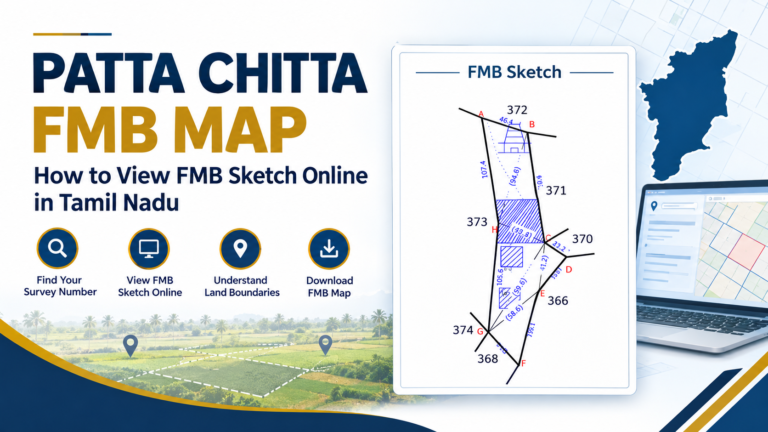
For a property-related review, you may also need to understand the survey number and land boundaries. Our guide to Patta Chitta FMB explains the role of the Field Measurement Book and its sketch in understanding land measurement information.
What Is FMB and Why Can It Matter During Property Research?
FMB stands for Field Measurement Book. It is associated with survey and measurement information for land parcels. An FMB sketch can help users understand the recorded shape and measurements of a parcel, subject to the details available in the official record.
FMB information is not the same as guideline value. One relates to survey measurement information, while the other is a registration-related valuation reference. They answer different questions.
For example, a buyer may want to understand the guideline value for registration-related planning and separately review survey details to understand the parcel’s recorded measurements. Neither search alone should be treated as a complete legal verification.
Read more in our Tamil Nadu Patta Chitta FMB guide.
What Is an A-Register and How Is It Different?
The A-Register is a revenue record associated with land details in Tamil Nadu. It may contain information such as survey references, land classification and other revenue-record particulars, depending on the record and its format.
An A-Register entry is not a guideline value certificate. It serves a different purpose and should be read alongside the relevant land documents when researching a property.
If you need to understand this record, see our detailed guide: A-Register Tamil Nadu – Meaning and Land Record Details.
TNREGINET Guideline Value and Encumbrance Certificate: What’s the Difference?
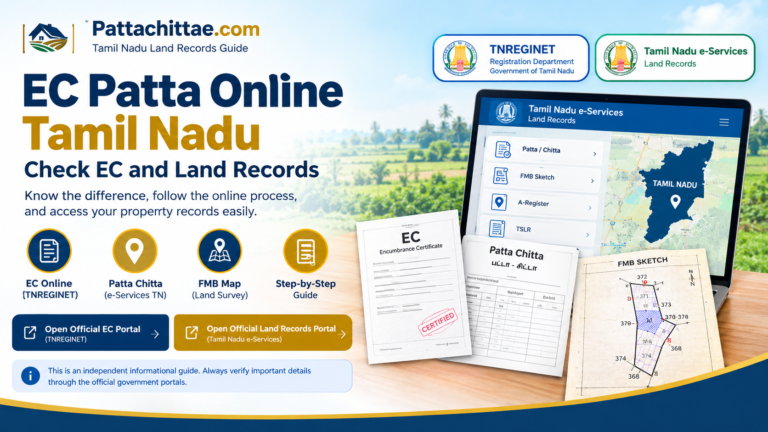
An Encumbrance Certificate, commonly called an EC, and a guideline value search are two different services associated with the Registration Department’s portal.
A guideline value search helps users look up the relevant government valuation reference. An EC search is used to review registration-related transaction or encumbrance information for a property over a selected period, subject to the records available in the system.
An EC should not be treated as a complete guarantee of ownership or the absence of every possible legal issue. Similarly, a guideline value result does not show the complete transaction history of a property.
| Feature | Guideline Value Search | Encumbrance Certificate |
|---|---|---|
| Main purpose | Look up a government valuation reference | Review registered transaction or encumbrance entries |
| Typical information | Location and applicable guideline value details | Available registered document details for a selected period |
| Common use | Registration-related valuation planning | Property transaction-history research |
| Does it prove complete ownership? | No | No; further legal verification may be required |
For help understanding EC-related services, visit our TNREGINET EC guide.
Why Should Buyers Check Guideline Value Before Purchasing Land?
Checking guideline value before purchasing land can help a buyer understand the official valuation reference associated with the property. It may also help the buyer prepare questions about registration expenses and compare the information with the proposed transaction.
However, a guideline value search is only one part of property due diligence. Before paying an advance or signing a sale agreement, a buyer should consider a broader review of the property and its documents.
Practical Checks for a Property Buyer
- Confirm the exact property location and boundaries.
- Compare survey and subdivision details with relevant records.
- Review available Patta and other revenue-record information.
- Review the EC for the relevant period and understand its limitations.
- Check the guideline value on the official TNREGINET portal.
- Ask about the applicable stamp duty and registration charges.
- Obtain legal advice on title, ownership and restrictions.
- Arrange a professional valuation if the transaction requires one.
These checks serve different purposes. A buyer should not assume that a matching guideline value, Patta entry or EC result alone confirms that the property is legally safe to purchase.
Why Should Sellers Check Guideline Value Before Selling?
A property seller may check guideline value to understand the official valuation reference relevant to the location. This can help when preparing for discussions with a buyer, document writer or registration professional.
However, sellers should not use guideline value as the only method of deciding the asking price. A realistic asking price may require an understanding of recent comparable sales, location, plot condition, access and demand.
If the property’s records contain different survey numbers, subdivisions or location descriptions, the seller should clarify those details before the transaction reaches the registration stage.
Does Guideline Value Decide the Final Selling Price?
No. The final selling price is normally influenced by the agreement between the buyer and seller, subject to applicable law and registration requirements. Guideline value is a separate government reference used in the registration context.
A property in a popular location may sell for more than its guideline value. In another situation, the market may be weak or the property may have specific limitations. This is why the market price and government guideline value should be evaluated separately.
For a purchase or sale, do not assume that the guideline value is a guaranteed market price, a guaranteed minimum offer between private parties or a complete appraisal of the property.
Can I Check Guideline Value Without Visiting an Office?
The TNREGINET portal provides an online guideline value search facility. Users can begin by visiting the official portal and following the currently available search instructions.
Whether a particular issue can be resolved online depends on the service and the information available in the system. If a record is missing, inconsistent or unclear, you may need to contact the relevant Sub-Registrar Office for clarification.
Do not assume that every property-related question can be resolved through the guideline value search alone. Some matters may require separate land records, registered documents or professional review.
Is TNREGINET Guideline Value Search Free?
The official portal provides the guideline value search facility for users to view available information. Always review the current official service page for any conditions or changes. Do not pay an unknown third-party website merely to display a result that is available through the official portal.
Be careful with websites that claim they can guarantee a special valuation, change an official entry or provide an official certificate without the relevant government process.
Do You Need to Create an Account?
Account requirements can differ between services on a government portal. Do not assume that the requirements for guideline value search are identical to those for document registration, certificate requests or other services.
Follow the instructions shown on the current TNREGINET page. If a service asks you to sign in, make sure you are on the genuine government website before entering credentials.
How to Avoid Fake TNREGINET Websites
Property-related searches can involve important financial decisions. Users should be careful when opening links shared through social media, messaging apps or unfamiliar websites.
- Check that the address belongs to the official government portal.
- Do not trust a website merely because it uses government-related words or logos.
- Avoid entering passwords, OTPs or financial information on unfamiliar pages.
- Do not install unknown applications advertised as mandatory for a simple search.
- Do not pay unofficial agents who promise to change government records.
- Use the official portal for the actual search and confirm important details with the department.
TNREGINET and Tamil Nadu Revenue eServices: Two Different Portals
Users sometimes confuse TNREGINET with the Tamil Nadu Revenue Department’s eServices portal because both websites contain land-related information. They serve different purposes.
TNREGINET is associated with the Registration Department and provides services such as guideline value search and EC-related facilities. The Revenue Department’s eServices portal is used for relevant revenue land-record services, including available Patta Chitta and related records.
| Portal | Department | Common purpose |
|---|---|---|
| TNREGINET | Registration Department | Guideline value, EC and registration-related services |
| Tamil Nadu eServices | Revenue Department | Available Patta Chitta and other revenue land-record services |
If your purpose is to check a guideline value, use TNREGINET. If your purpose is to look up Patta Chitta or another revenue record, use the relevant Revenue Department service instead.
What Should You Do If the Guideline Value Looks Incorrect?
If the result seems inconsistent with your property documents, avoid making an immediate assumption. First, confirm that the correct district, SRO, village, street or survey number has been selected.
Next, compare the result with the effective period and property category shown by the official portal. A mismatch may be caused by a wrong selection, an outdated document reference or a difference in the way a location is recorded.
If the mismatch remains, contact the relevant Sub-Registrar Office and explain the issue. Keep copies or details of the relevant property documents available. If the issue involves a survey or revenue-record discrepancy, you may also need guidance from the appropriate Revenue or Survey authority.
Common Mistakes to Avoid During Guideline Value Search
Using Only the District Name
A district name alone may not identify the exact property entry. Check the other location fields requested by the portal.
Ignoring the Survey Subdivision
Where a subdivision number is relevant, leaving it out can create confusion between different portions of a larger survey parcel.
Confusing Guideline Value With Market Price
A government reference is not a professional appraisal or a guaranteed sale price. Consider market evidence separately.
Using an Old Screenshot
Old screenshots may not reflect the current portal or effective period. Recheck the official result when preparing for a transaction.
Assuming an EC Is a Complete Title Certificate
An EC is useful for reviewing available registration entries, but legal title verification may require additional records and professional advice.
Trusting Unofficial Payment Requests
Use the official portal for government services. Be cautious of unknown websites that ask for payment or personal information without a clear official process.
Practical Example: Checking a Property Before Registration
Consider a person planning to purchase a residential plot in Tamil Nadu. The buyer has received a copy of the sale document and wants to understand the guideline value before proceeding.
The buyer can follow a sensible research sequence:
- Read the property address and identify the district and relevant registration area.
- Note the survey number and subdivision details from the available documents.
- Open TNREGINET and use the available guideline value search option.
- Compare the displayed location and value with the property details.
- Review Patta and relevant revenue records separately.
- Review the available EC information for the relevant period.
- Ask the registration office or a qualified professional about applicable charges and unresolved discrepancies.
This approach helps the buyer avoid treating one online result as a complete property verification. Each record has a separate purpose and should be checked accordingly.
Checklist Before You Rely on a Guideline Value Result
- Correct district or zone selected.
- Correct Sub-Registrar Office selected.
- Registration village matches the property details.
- Street name or survey number checked carefully.
- Subdivision details included where required.
- Property category reviewed.
- Effective period checked.
- Result compared with relevant property documents.
- Unclear information confirmed with the appropriate office.
- Registration charges checked using current official information.
Related Tamil Nadu Land Record Guides
Guideline value is only one part of understanding a property. Depending on your purpose, you may also need to review revenue records, survey details and registration information. The following guides on PattaChittae.com explain related topics.
Frequently Asked Questions – TNREGINET Guideline Value Search
1. What is TNREGINET Guideline Value Search?
It is an online search facility provided through the Tamil Nadu Registration Department portal to look up available government guideline value information for land and property in Tamil Nadu.
2. Where can I check the official guideline value?
Visit the official TNREGINET portal and follow the current Guideline Value search instructions.
3. Can I search guideline value by street name?
The portal provides a Street search option. Select the relevant registration area and street according to the options shown on the official website.
4. Can I search guideline value using a survey number?
The portal provides a Survey Number search option. You should enter the correct survey and subdivision details where requested.
5. What is the difference between guideline value and market value?
Guideline value is a government valuation reference used in the registration context. Market value is the price a property may attract in the actual market based on demand, location and property-specific factors.
6. Is guideline value the same throughout Tamil Nadu?
No. Values can vary according to location and the relevant property entry. Check the exact street, village or survey-number details instead of relying on a general state-wide figure.
7. Does guideline value decide the final selling price?
No. The final selling price depends on the transaction between buyer and seller and relevant market conditions. Guideline value is a separate government reference.
8. Is guideline value used for registration-related charges?
Guideline value can be relevant to registration-related valuation and charges. The applicable calculation depends on the document type and rules in force. Confirm the current amount through official sources.
9. Can I check guideline value before buying land?
Yes. Checking the available guideline value before a purchase can help you understand the government valuation reference. It should be combined with title, revenue-record and other property checks.
10. Why is my street not appearing in the search?
Check the spelling, registration area and selected SRO. If the street still does not appear, contact the relevant registration office for clarification.
11. What should I do if my survey number is not found?
Compare the survey number and subdivision with your property documents. Check the registration village and other search fields. If the issue remains, ask the appropriate authority to clarify the record.
12. What is a subdivision number?
A subdivision number identifies a particular portion of a larger survey parcel. It can help distinguish separate land portions recorded under a parent survey number.
13. What does Composite Value mean?
Composite Value is an option shown in the TNREGINET guideline value interface. Users should refer to the official portal’s current description and instructions to understand when it applies.
14. Can guideline value change over time?
Government guideline values may be revised through the applicable process. Always review the effective period shown by the official portal instead of relying on an old screenshot or article.
15. Is guideline value proof of property ownership?
No. A guideline value result is a valuation reference, not proof of ownership or a title certificate. Ownership and title require separate verification.
16. Is an Encumbrance Certificate the same as guideline value?
No. Guideline value provides valuation information, while an EC helps users review available registered transaction or encumbrance entries for a selected period.
17. Is Patta Chitta the same as TNREGINET guideline value?
No. Patta Chitta information belongs to the revenue-record context, while guideline value is a Registration Department valuation reference. They serve different purposes.
18. Can I use an old sale deed to find guideline value?
An old sale deed may contain historical transaction information, but it should not be treated as confirmation of the current guideline value. Check the official portal for the relevant current entry.
19. What if the online value does not match my documents?
Check the location, survey number, subdivision and effective period. If the mismatch remains, contact the relevant Sub-Registrar Office and seek professional guidance where necessary.
20. Does a guideline value search verify the property’s legal status?
No. It does not establish title, confirm boundaries or guarantee that there are no disputes. Separate document and legal checks may be necessary.
21. Can I check guideline value from outside Tamil Nadu?
You can try accessing the official portal online from another location. The property details must still relate to the correct Tamil Nadu registration area.
22. Do I need an agent to check guideline value?
You can begin the search yourself through the official portal. If you have difficulty identifying the correct entry or understanding a legal issue, you may seek help from the relevant office or a qualified professional.
23. Is the guideline value result enough to decide whether to buy a property?
No. It is only one piece of information. Buyers should also review title documents, relevant revenue records, EC information, boundaries, access and other property-specific matters.
24. Where can I find Patta Chitta and FMB information?
Use the relevant Tamil Nadu Revenue Department services and read our Patta Chitta FMB guide for general information.
25. Where can I learn about A-Register details?
Read our A-Register Tamil Nadu guide to understand the purpose of this revenue record.
26. Where can I learn about TNREGINET EC?
Our TNREGINET EC guide explains the general purpose of Encumbrance Certificate services.
27. Should I trust a third-party website showing a guideline value?
Use third-party websites only for general explanations. Confirm the actual value and current instructions through the official Tamil Nadu Registration Department portal.
Final Thoughts
TNREGINET Guideline Value Search is a useful starting point for people who want to understand the government valuation reference associated with land or property in Tamil Nadu. By checking the correct street, survey number, registration village and other location details, users can find the relevant entry available through the official Registration Department portal.
However, a guideline value should not be confused with market value, proof of ownership or a complete property valuation. It is one part of a wider property research process. Buyers and sellers should also consider relevant revenue records, registered documents, EC information, survey details and professional advice where required.
Before making a payment or proceeding with registration, confirm the current value and applicable charges through official channels. If an online result does not match your documents, contact the relevant Sub-Registrar Office rather than guessing or relying on an unrelated online result.
Check the Official Guideline Value
Use the Tamil Nadu Registration Department portal for the current guideline value search and verify property-specific information before making an important decision.